Pickle Heaven Press-James R. Johnson

something to help you laugh and think about life with Christ

the tollbooth — April 14, 2021

the tollbooth

I loved to hear my mother laugh.  And there was one story that would always cause her to giggle.

She and dad had been visiting in Georgia.  He was impatient and wanted to drive back to their home in Florida even though it was pouring rain. 

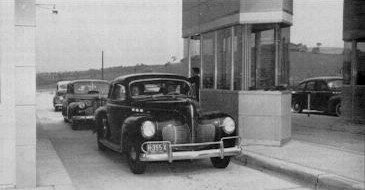
So, they departed that stormy night.  Soon after, he lost his way and was a little flustered.  Ahh, but the entrance to the tollway was just ahead.   Dad pulled up to the booth and handed a dollar to the uniformed man.  But the guy responded by saying, “Uh sir – this is an army base!” 

___________

Dad attempted to enter a place where he was not welcome and which required more than a dollar.  Some of us may have a similar experience one day – but it won’t be as funny. 

As someone who ministers to the dying, I have often found that they are usually confident that heaven awaits them, regardless of how they have lived or whether they are religious or not. 

According to Jesus, this may be a fatal presumption.

He said, “Not everyone who says to me, ‘Lord, Lord,’ will enter into the kingdom of heaven—only the one who does the will of my Father in heaven. On that day, many will say to me, ‘Lord, Lord, didn’t we prophesy in your name, and cast out demons in your name, and do many powerful deeds in your name?’ Then I will declare to them, ‘I never knew you. Go away from me…” – Matt 7:21-23

Shocking words and yet spoken by the Prince of love – because of His love for us.  He wants to awaken us from the blind presumption that heaven is a universal entitlement. 

The problem is that we want to hand the sentry a dollar to get by when something else is needed.  

Paul tells us what.  “For by grace you are saved through faith, and this is not from yourselves, it is the gift of God; it is not from works, so that no one can boast.”  Ephesians 2:8-9

Heaven comes to us as a gift from God.  It is not a privilege that we earn, but rather receive.  It was purchased for us by Christ who bore the penalty for our sin.   We are given a pass to heaven the moment we look to God through Christ, in faith and say, “God, be merciful to me, sinner that I am!”  – Luke 18:13

But how can we know that our faith is genuine?   After all, the Scripture says, “Even the demons believe…and tremble with fear.” – James 2:19 

The fruit of saving faith is the proof of saving faith. 

Jesus said, “a tree is known by its fruit.” – Matthew 12:33. John the Baptist said, “Produce fruit that proves your repentance.”  – Matthew 3:8

In other words, the way we live, the values we embrace, the faith we practice, the Lord we serve tend to trace the validity of our faith.

We are saved by our faith in Jesus, but there should be evidence to follow.  Saul’s heart and behavior were radically changed after his Damascus Road experience, whereas, the thief on the cross experienced not much more than a changed heart.   But, both were produced out of a saving faith.

Now if this blog causes you concern, then it is likely because your heart already belongs to Jesus.  Why would you even worry about this issue if it didn’t?   Unless – you have never trusted the Lord, then your concern is drawing you to Jesus.   If that’s the case you probably need to whisper that prayer, “God, be merciful to me, sinner that I am!”

When you and I stand at the toll booth in the sky, may we offer not a dollar, but evidence of a faith in Christ that has changed us!

PS: Social media is for sharing.  So share this. 

A PRAYER: Lord thank You for truth that will keep me from tragedy at the gates of heaven.

Scripture references are from the NETBible ®

breaking camp — June 24, 2020

breaking camp

It is summer and a great time to go camping, unless you live in Texas, where the heat can approach the outer limits of hell. 

Summer camping elsewhere is usually fun.  My wife and I just returned from an outing, where a fresh cool breeze wafted through our camper each night.  We had lots of relaxing time with the Lord and each other.  (that’s what happens when you leave the grandkids behind) 

Of course, some trips are not so relaxing.  My extended family did a big outing once.   Pretty memorable.  It started with a rampage of ground hornets who had been aggravated by a lawnmower.  My grandson sustained several stings. 

Later that evening my granddaughter spied a night intruder.  In a trembly voice she cried, “a snake!”   My son ground the baby copperhead to pieces.  But nature got him back the next day, when a squirrel in a tree relieved himself on my boy’s head.   The next morning, there was a loud ominous crack in a tree which dropped a massive limb barely behind us.

Then there were the honeybees that sought out my sweet daughter, and there was the earsplitting industrial hum that came from the power plant across the lake.  Actually, it was better for sleeping than white noise.  All that in one outing.  Fun!

I love to camp but I must admit that my favorite part is going home.  Roughing it is great for a time – a short time.  A human burrito sleeping bag is OK for a night and a charred hot dog is good once a year.  But there is nothing like packing up and going home.  

I suspect that is why Paul used a camping word to capture the way we go to heaven.  In Philippians 1 we find him conflicted wanting to continue his work on earth while longing for the comforts of his heavenly home. 

He wrote, “For to me, living is Christ and dying is gain. 22 Now if I am to go on living in the body, this will mean productive work for me, yet I don’t know which I prefer: 23 I feel torn between the two, because I have a desire to depart and be with Christ, which is better by far, 24 but it is more vital for your sake that I remain in the body.”  NET Bible ®

Did he really say that – “dying is gain?”   

He believed that dying is a departure from this life and a move on to heaven.  The word depart (verse 23) was actually a camping term in Paul’s day.  It was used to describe an army that was breaking down their tents and moving out. 

In 2 Corinthians 5:1-5 Paul reminds us that our bodies are like tents – designed for a temporary stay – flimsy, tattered, and insufficient for the long haul.   Paul was ready to pack up his ratty tent and trade it in for the eternal home that Jesus had prepared for him.  (John 14:1-3)

The word depart was exceptionally colorful. Not only was it used of camping, it was also a nautical word descriptive of a ship that was being loosed from her moorings.  

In a similar way, we are moored to the pier of a place that is not our home.  It feels somewhat secure to be tied here, but the longer we remain, the longer we postpone the joys of being where we really belong. Death is the process of casting off the restraining ropes and sailing home.

Depart was also a legal term used to describe the release of someone from prison.  I think of some of the folks I care for as hospice chaplain.  Their health has declined and has imprisoned them in bodies to where they can’t even escape their bed.  For them death, becomes a benevolent liberator.

The word was also used with livestock.  It described the process of unyoking oxen.  They say a team of 2 oxen can pull about 12,000-13,000 pounds of weight.  That’s incredible. 

After a hard days work, I bet those beasts were relieved to have that heavy yoke removed.  Death does the same for us.  It relieves us of the backbreaking responsibilities of this life. 

All of us will face the prospect of death eventually.  When we belong to Christ, death can be regarded as more of a friend than a foe. 

It enables us to trade in our temporal tent for an eternal home.  It loosens the ropes that bind us to the dock of this life.  It releases us from the circumstances that imprison us and it relieves us of our burdensome yoke to give us rest. 

Paul makes a great argument for breaking camp.  I am looking forward to it.

green stamp hope — August 7, 2019

green stamp hope

james ray johnson

Mom had her hope set on a plastic plant that was rooted in Styrofoam, surrounded by 8 cedar planks and bound by brass bands.  Back in the 50’s this was considered to be attractive! 

My dad worked awfully hard, often 2 jobs, but money always seemed to be tight.  We were not poor, but we were the next thing to it.  We couldn’t afford such an item, but mom had a plan. 

Each week, the grocer gave her S&H Green Stamps in proportion to what she spent on groceries.  With 5 kids to feed, that was a lot of brown paper bags full.  One day she gathered her stamps and drafted us kids to fill her redemption books.  We licked ourselves silly.

Then all 7 of us jumped into our 56 Chevy wagon and headed to the redemption center where mom traded her green stamps for her heart’s desire – one cedar planter. 

She was happy!  She finally had some “nice” in the midst of the drab.  She proudly placed it in the living room for all to see and she really enjoyed it – for most of one day.  

See we were a wrestling bunch.  We kids liked to mix it up with dad on the floor.   Well he flipped one of us the wrong direction and crash went the planter.  It was flatter than mom’s expression when she saw it.   

She held her tongue while dad got out the tool box, with which he was known to do wondrous things.  He once took a bicycle kickstand and refashioned it into a car gear shifter.  So he used his screws and glues and the planter was restored.  Sure, there was a chipped board and a dangling leaf, but it was still sorta nice.

Days later, another kid planted themselves on the planter.   Dad worked his magic again, but it looked – well – it was looking more like the décor of the Frankenstein household.   Mom was a saint.  She said nothing. 

The cataclysmic cycle was repeated yet again.  Mom was living the sequel to the movie Groundhog Day.

And then – a fourth crash.  But this time, mom got to the wreckage before dad and she stomped it into cedar splinters and plastic plant pulp.  She wasn’t going to leave anything that dad could possibly resurrect. 

Her hope of having something nice died with that last crash.  She could hope no more.

Hope sometimes dies!

He hoped to get promoted at work.  He gave it his best, but 5 years later he was still lodged in the same cramped cubicle.  He quit trying and settled into 8 hours a day of apathy.

She was a writer who hoped to get her novel published.  It wasn’t!  After 56 letters of rejection, she threw her manuscript in the burn pile.

A young man hoped for years that his inattentive wife might change.  She wouldn’t!  He eventually stomped on that hope when he left her for another. 

Oh, for a hope that will not disappoint!   

Oh, but there is such a hope!

Titus 1:2 speaks of the “hope of eternal life, which God, who does not lie, promised before time began.”   NET Bible®   Eternal life is a never ending, blissfully, sweet existence in the company of Jesus and all our friends and family who have ever loved Him. 

According to the verse, God promised this eternal life before time began.  And since God is all knowing and all powerful and because He cannot lie, then we can count on it.

This hope will never disappoint. It is possessed only by those who have trusted Christ to remove their sins.

It’s ironic that the cedar wood in mom’s planter is valued for its ability to resist rot and insect damage.  Yet, it can’t begin to compare to the durability of our eternal hope.

Mom gave up on her prized planter, but she has held fast to the hope of eternal life.  She has passed on and is now enjoying that hope that will never be broken or even lamely patched.

My dad is trying his best to join her.  Any day now, he too will enter that place of sweet eternal hope.  But for mom’s sake, I hope he leaves his tool box behind.  

No Fare! — February 27, 2019

No Fare!

We were bored and bottom-of-the-bucket broke, so several of us junior highers decided to become caddies.   It looked easy on TV.  The caddie followed the pro around, lugging a bag of clubs.  Sometimes he whispered stuff in his ear like, “Hey check your fly. You’re on TV for goodness sake!”   We could do that.

Early the next morning the four of us walked to the course.   If GPS had been invented, we would have known that it was 11 miles away.  Maybe we should have consulted a map first?  Oh well!  We finally shuffled into the clubhouse in the late morning only to have our ambitions crushed. “We don’t use caddies here!”   Hmm!  Maybe we should have called first!  Oh Well!

There was an optimist among us.  He mentioned another course in Worthington, the next town over.  So, we back-tracked 6 miles and then caught a city bus.  It was now well after lunch time and I had just used my last 20 cents for bus fare.  It was worth it – better than a limo.

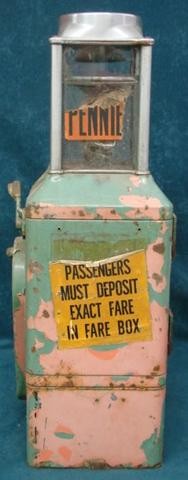
The bus reached our stop and we tried to get off, but the driver said, “That will be 10 cents!”  “Why?”  He said, “Because we entered Worthington and there is a surcharge of 10 cents.”   So, each of us begrudgingly dropped in another dime. 

I was last in line and in a panic.  The only thing left in my pocket was lint, but he wouldn’t let me off until I paid my 10 cents.   The bus was stopped, the driver was irked, the rest of the riders were grumbling with impatience, and my friends were already off the bus.

I suddenly got a premonition of the future – me, trapped in a bus, on an endless loop to nowhere.  If I were lucky maybe a girl would show up someday who had made the same mistake.  We could marry, I could work as the bus driver (white socks and all) and we would have little bus babies.  

The daydream was broken by the sound of a rattling coin in the fare box.  Another rider took pity and dropped in a dime – for me.   With humility I whispered, “thanks” and jumped off.

That was a ridiculously hopeless feeling, but it was not a feeling that was new to me.   I grew up with the idea that I had to pay my way to heaven.  I needed to go to church and pray and give and live a stellar life and then – drop it all in God’s celestial fare box.  That was the price to get to heaven.

I worked hard at all those things, but I would also wonder if what I did was ever enough?  What if my bus pulled up to heaven and God were to say, “Sorry buddy, you are 10 cents short. You aren’t getting off till you pay up.”?

It wasn’t until later that I learned that I could contribute nothing to my journey.  God looked at my good deeds and called them “filthy rags” (Isaiah 64:6).  My efforts were costly, and they looked good, but they accomplished little.

Then I came to understand Jesus and the reason He came.  The apostle Peter wrote, “Christ also suffered once for sins, the just for the unjust, to bring you to God.” (1 Peter 3:18) NET Bible®   It was Christ who paid my fare.  He suffered and died on a cross in my place to bring me to God. 

When I accepted His gift, I was invited to get on the bus and when that bus finally stops at the gate of Heaven, I will move toward the exit in confidence because Peter used the word “once.”  Christ suffered “once” for my sins to bring me to God.  It was enough to cover every contingency.  Jesus paid it all – forever. 

From the bus stop we walked another mile to a posh country club.  It turns out, that they did employ caddies, but not the likes of us.  Besides, all the golfers had gone home to have the evening meal with their families.   So, with tails between our legs, we turned and walked home – which was another 10 miles.  

That day we ambitious but naïve kids walked about 26 miles and spent 13 hours doing it.  What did we learn?  Two things:  1) Mowing lawns is an easier way to make money; 2) It’s wonderful to have someone who is willing to pay what we are incapable of paying.

Enjoy the original song below!

Up the Hill. Written: Jim Johnson.  Vocals: Sharie and Jim Johnson